
 6108 Skillman St, Dallas, TX 75231
 (469) 998-9822
Bone Grafting – Dallas, TX
Preventing Bone Loss After a Tooth Extraction
Sometimes, having a tooth extracted is the only way to protect the health of your smile. However, once the tooth has been removed, bone loss will start to occur in the area where it used to be. In order to prevent bone loss, our team at Skillman Family Dentistry of Dallas can follow up your tooth extraction with bone grafting. Read below or give our office a call if you’re interested in learning more about bone grafting in Dallas.
Why Choose Skillman Family Dentistry of Dallas for Bone Grafting?
- Experienced, Caring Dentist and Team
- State-of-the-Art Technology
- Flexible Financing Options Available
What Is Bone Grafting?
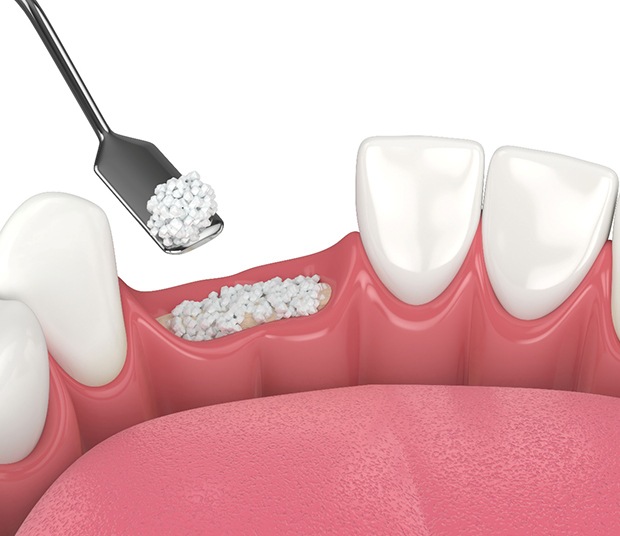
Dental bone grafting is meant to add volume and density to specific areas of your jawbone. It involves applying grafting material to the parts of the jaw where bone has been lost or weakened. Depending on the situation, a bone graft can be performed with bone from your own body, bone from a donor, or synthetic grafting material.
The Bone Grafting Process

Bone grafting can often be performed during the same visit as your tooth extraction. Once the tooth in question has been removed, we’ll take whatever steps are needed to prepare the now-empty socket. We will then apply the grafting material to the appropriate area. A membrane may be placed to stop the gum tissue from growing into the graft site. Then the gums are sutured shut.
For the sake of your comfort, a local anesthetic will be used to numb your mouth during your bone grafting procedure. Once the treatment is complete, our team will give you instructions for managing your discomfort and taking care of your smile during the recovery process.
The Benefits of Bone Grafting

Bone grafting helps prevent the jawbone deterioration that would normally occur after a tooth has been removed. This has several benefits:
- It helps strengthen the jaw, which can improve biting and chewing.
- It stops your remaining teeth from drifting out of their proper positions.
- It lowers your chances of experiencing facial collapse, which often occurs when the jaw is no longer capable of giving the facial muscles the support they need.